How to play Riftbound
A complete beginner’s guide, from your first point to winning the game.
This guide covers a whole game of Riftbound in 7 short lessons: the cards you start with, setting up, a full turn, paying costs, combat and winning, then a real starter deck. Read it here, or play each lesson with real cards on an interactive table.
Contents 7 lessons
Lesson 1 of 7
Your first point
Meet your Legend, Chosen Champion and decks, then follow one unit to your first point.
Play this lesson on the table →
Meet your cards
Start with your Legend
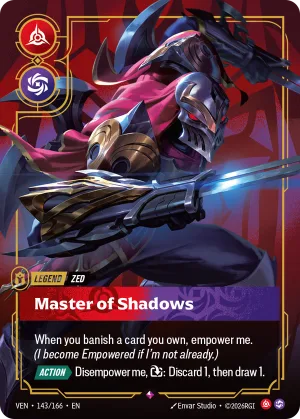
This card sets your deck’s colors. Keep it in your Legend Zone throughout the game.
Core Rules 103.1; 107.4
Your Chosen Champion is a unit
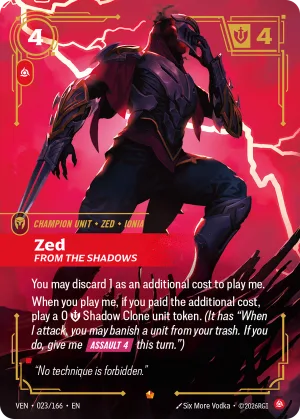
Both cards have the Zed tag, so they match. Your Legend stays in its zone. Your Chosen Champion is a unit you can play and fight with.
Core Rules 103.2.a; 108.3
Your cards to play
Units, spells and gear go here: at least 40 cards, including your Chosen Champion. We set Zed aside and shuffle the other 39 cards.
Core Rules 103.2; 108.4; 108.7
A separate deck for resources
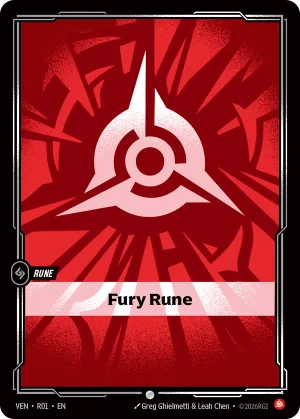
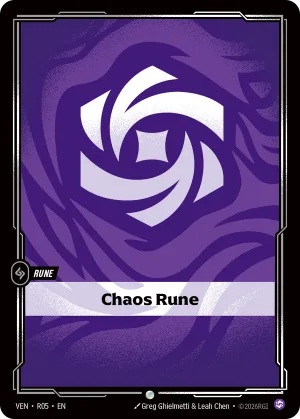
Keep your 12 runes in their own shuffled deck. In your Channel Phase, bring 2 onto the table. This is called channeling. Runes supply resources to play your cards.
Core Rules 103.3; 315.3; 164.2
See the table
Find your base
Your familiar cards and decks sit on your side. Your base is where you play your units.
Core Rules 107-108; 485.4
Points come from battlefields
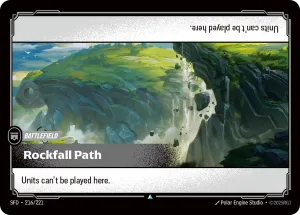
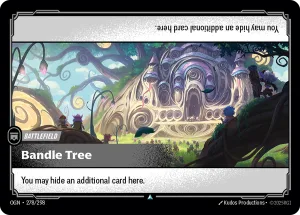
In 1v1, reach 8 points to win. Let’s follow one unit to see how taking control earns your first point.
Core Rules 485.3; 469-471
Play one unit
The energy cost is the number at the top left
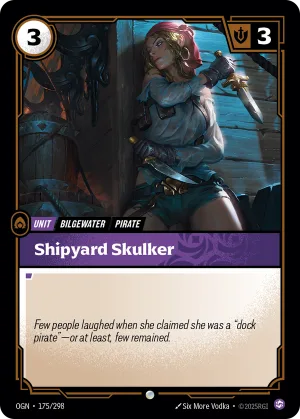
This is Shipyard Skulker. The number at the top left tells you how much energy it costs to play.
Core Rules 128-129; 143.2
Pay 3 energy for Skulker
Each ready rune adds 1 energy when you turn it sideways. This is called exhausting.
Core Rules 164.2; 338-340; 143.4
Can this unit move now?
A standard move exhausts a ready unit. Skulker is already sideways, meaning exhausted. What should you do?
Answer: Without another effect, wait until your next turn readies it. It does not ready when the opponent’s turn begins.
Core Rules 143.4; 144.1-144.2; 414
Your next turn readies your cards
Your turn ends. The opponent takes a turn without changing this position. Now it is your turn again.
Core Rules 315-317
Earn a point
Move Skulker to a battlefield
Skulker is ready. A standard move to either battlefield exhausts it.
Core Rules 144; 316.8
Give both players a chance to act
This response window is a Showdown. You can add a legally timed spell or ability, or pass. In this example, both players pass.
Core Rules 344-348
Taking control earns your first point
Both players passed. Only your unit is here, so you take control. Scoring this way is called conquering.
Core Rules 348.2; 469.1; 470-471
Your unit is still there next turn
The opponent takes a turn without removing your unit or taking control. When does your next point arrive?
Core Rules 315.1-315.2; 469.2; 470
Try it yourself
Which unit can move?
It is your Main Phase, with an empty chain and no Showdown. No effects are changing either copy.
Answer: The upright copy can exhaust to move. The sideways copy cannot pay that cost. Same card, different available action.
Core Rules 144.1-144.2; 315; 469-471
When do you score?
Answer: In this position, both players pass, you establish control, and you conquer. Arrival alone is not a point.
Core Rules 144.1-144.2; 315; 469-471
When do you score again?
Answer: If you keep control, you score for holding in your next Beginning Phase. Readying in Awakening is not scoring.
Core Rules 144.1-144.2; 315; 469-471
Three things to take to the table
A unit’s cost, readiness and location tell you different things. So does the timing of your turn.
Core Rules 143-144; 469-471
Lesson 2 of 7
Set up a game
Lay out your deck, pick a battlefield, decide who goes first, draw four and mulligan.
Play this lesson on the table →
Your zones
Lay out your deck
A deck is a Legend, a Main Deck of at least 40 cards with your Chosen Champion in it, a Rune Deck of 12 runes, and three battlefields for a 1v1 game.
Core Rules 103; 485.4
Legend to the Legend Zone
Your Legend starts the game in its zone and stays there. It’s never shuffled into a deck.
Core Rules 111; 174.2
Chosen Champion to the Champion Zone
Take your Chosen Champion out of your Main Deck and put it face up in the Champion Zone.
Core Rules 112; 103.2.a
Battlefields and decks
One battlefield, picked at random
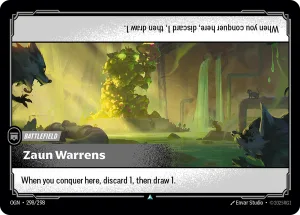
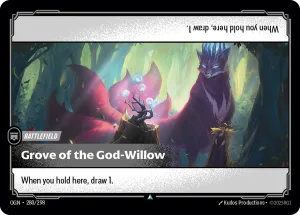
In a 1v1 duel each player brings three battlefields and uses one, picked at random. Both players place theirs at the same time. The other two aren’t used this game.
Core Rules 113; 485.4-485.5
Shuffle each deck on its own
Shuffle your Main Deck and your Rune Deck separately, then put each in its zone.
Core Rules 114
Who goes first
Decide who goes first
Use any fair random method both players agree on, like a coin flip. In this example, the opponent goes first and you go second.
Core Rules 115
What does the second player get?
Think about your first turn.
Answer: The player going second channels one extra rune in their first Channel Phase.
Core Rules 485.7
Opening hand
Draw 4
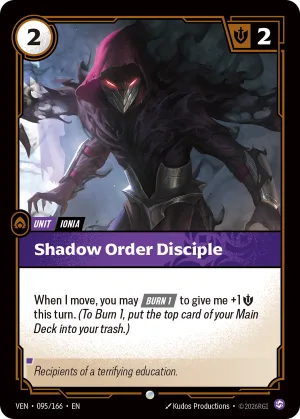
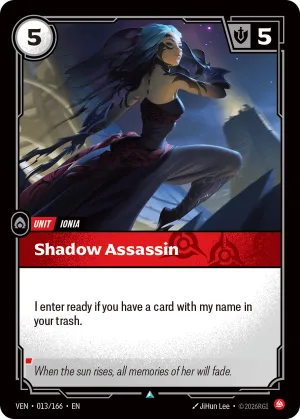
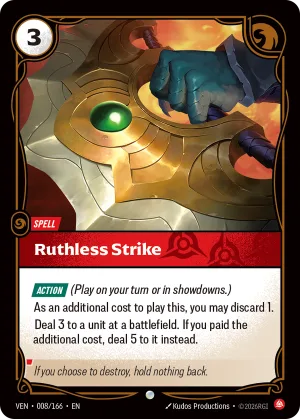
Each player draws 4 cards from their Main Deck.
Core Rules 116
Set aside up to two cards
In turn order, each player may set aside up to two cards, draw that many, then recycle the set-aside cards to the bottom of their Main Deck. You can also keep all four.
Core Rules 117; 416
Where do set-aside cards go?
After you draw replacements, the cards you set aside leave your hand.
Answer: Recycling puts cards on the bottom of their deck. They aren’t shuffled in.
Core Rules 117.3; 416.1
Ready
The first player takes their turn
Setup is done. The opponent starts. On your first turn, you channel one extra rune.
Core Rules 118; 485.7
Lesson 3 of 7
The whole turn
Awaken, Beginning, Channel, Draw, Main and Ending: every step of a turn, in order.
Play this lesson on the table →
Start of turn
Every turn has the same shape
Start of turn: Awaken, Beginning, Channel and Draw. Then your Main Phase. Then the Ending Phase. Your cards are still sideways from last turn.
Core Rules 301-317
Awaken: ready everything
Ready every card you control that can be readied: your units and your runes.
Core Rules 315.1; 415
Beginning: effects, then scoring
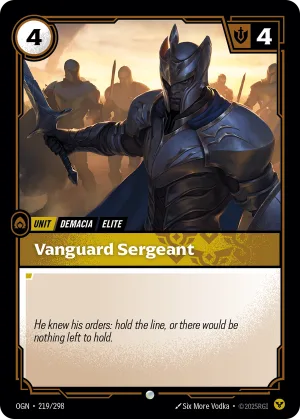
Start-of-turn effects happen first. Then you hold each battlefield you control. Your Sergeant is still at Rockfall Path.
Core Rules 315.2; 469.2
Channel: 2 runes
Put the top 2 runes of your Rune Deck onto the table, ready. If fewer than 2 are left, channel as many as you can.
Core Rules 315.3; 430
Draw: 1 card
Draw 1 card from your Main Deck into your hand.
Core Rules 315.4
What if your Main Deck is empty?
You have to draw 1, but there are no cards left in your Main Deck.
Answer: You Burn Out: recycle your trash into your Main Deck, choose an opponent to gain 1 point, then draw.
Core Rules 315.4.b; 431
Main Phase
Main Phase: your turn to act
Your rune pool empties first. Then you can play cards, move units and use abilities, in any order, as long as you can pay for them.
Core Rules 316
Ending
Ending: effects, then cleanup
End-of-turn effects happen. Then every unit heals, effects that last “this turn” end, and your rune pool empties. Say a spell dealt 2 damage to your Skulker this turn.
Core Rules 317
Try it yourself
Which comes first?
Two steps at the start of your turn.
Answer: Channel comes before Draw.
Core Rules 315; 165-167
Three things to take to the table
The start of your turn runs itself in order. The Main Phase is yours. The Ending Phase cleans up.
Core Rules 314-317
Lesson 4 of 7
Energy and power
Exhaust runes for energy, recycle them for power, and pay a card that needs both.
Play this lesson on the table →
Two costs
Some cards cost energy and power
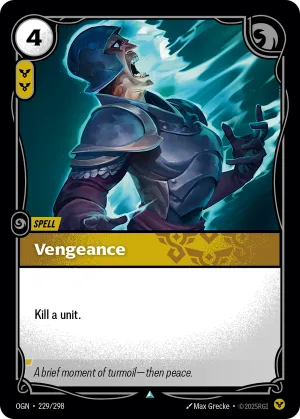
Vengeance costs 4 energy and 2 Order power. It kills a unit. You have four ready Order Runes.
Core Rules 131; 163
Energy
Exhaust a rune: 1 energy
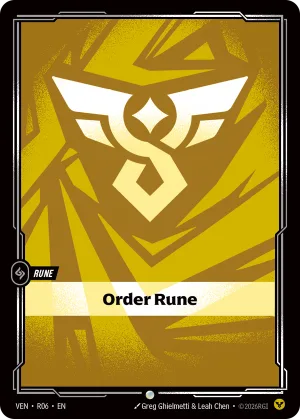
Turning a ready rune sideways adds 1 energy. Vengeance needs 4.
Core Rules 164.2.a; 414
Power
Recycle a rune: 1 power
Recycling a rune adds 1 power of that rune’s domain and puts the rune on the bottom of your Rune Deck. It doesn’t need to be ready, so an exhausted rune can still be recycled.
Core Rules 164.2.b; 161.2.b; 416
Play it
Play Vengeance
You have 4 energy and 2 Order power. Choose the opponent’s Shipyard Skulker as the target.
Core Rules 155-158; 340
What happens to energy you don’t spend?
Say you had exhausted a fifth rune and never used that energy.
Answer: Your rune pool empties at the start of your Main Phase and at the end of each turn. Unspent energy and power are lost.
Core Rules 165-167
Try it yourself
Which rune do you recycle?
A card needs 1 Fury power. You have a ready Chaos Rune and a ready Fury Rune.
Answer: Recycling adds power of the rune’s own domain. Only the Fury Rune makes Fury power.
Core Rules 163.2; 164.2.b.1
Three things to take to the table
Energy pays the number. Power pays the domain. The order you use a rune matters.
Core Rules 163-168; 416
Lesson 5 of 7
Your first combat
Move into a battlefield the opponent holds, assign combat damage and see who takes control.
Play this lesson on the table →
Move in
Their unit holds a battlefield
The opponent controls Rockfall Path with a Shipyard Skulker there. Your Vanguard Sergeant is ready at your base. Neither card has ability text, so only Might decides this fight.
Core Rules 146; 188-190
Move your Sergeant to Rockfall Path
A standard move exhausts your unit. Moving to a battlefield you don’t control makes it contested.
Core Rules 144; 447-453; 461
Attack and defend
You’re the attacker
The player whose unit made the battlefield contested is the attacker. The other player is the defender. Every unit there takes its controller’s role.
Core Rules 464.2.c
A showdown comes before damage
Both players get a window to play Action and Reaction cards. The attacker has focus first. In this example, both players pass.
Core Rules 464.2.d; 341-348
Damage
Your Sergeant is exhausted. Does it still fight?
Moving exhausted it. Think about what combat counts.
Answer: Combat totals the Might of every attacking unit there. Ready or exhausted makes no difference.
Core Rules 465.2.a
Assign your 4 damage
Starting with the attacker, each player assigns damage equal to the total Might of their units there, among the other player’s units.
Core Rules 465.2.a-c
Which units have lethal damage?
All assigned damage is dealt at the same time. Lethal damage is damage equal to or greater than a unit’s Might.
Answer: Skulker has 4 damage against 3 Might: lethal. Your Sergeant has 3 damage against 4 Might: not lethal.
Core Rules 142.4; 465.2.c.1; 465.2.d
The result
Lethal damage kills. Then every unit heals
Units with lethal damage die and go to their owner’s trash. Then all units heal, so damage doesn’t carry over.
Core Rules 466.1; 323.4-323.5
You won. Take control and conquer
Only your unit remains, so you won the combat. You establish control of Rockfall Path. You haven’t scored it this turn, so that’s a conquer: 1 point.
Core Rules 466.3; 466.5; 469.1
Try it yourself
How can you assign your 4 damage?
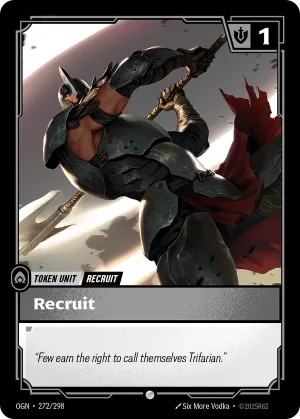
Your Sergeant attacks two defenders: a Shipyard Skulker with 3 Might and a Recruit with 1. You assign first.
Answer: Lethal damage to one unit first, then the rest to the next.
Core Rules 465.2.c.3-4; 142.4.b; 466.5.b
Three things to take to the table
Who attacks, how damage is assigned, and who is left standing tell you who scores.
Core Rules 459-466; 469
Lesson 6 of 7
Winning the game
Eight points wins, and the last point has a condition: learn when a conquer wins and when holding does.
Play this lesson on the table →
Eight points
First to 8 points wins
In a 1v1 game the victory score is 8. Every point comes from a battlefield: you conquer it or you hold it.
Core Rules 469; 485.3
Can one battlefield score twice in a turn?
Say you conquered Rockfall Path earlier this turn. Your unit leaves, comes back, and you take control again.
Answer: Each battlefield can score for you only once per turn, by conquering or holding.
Core Rules 469.1; 470
The final point
Take Bandle Tree
You control no battlefields. Bandle Tree is empty. Move your Skulker there.
Core Rules 144; 344-348
Do you gain your 8th point?
You take control of Bandle Tree. It’s a conquer, and you’re 1 point from winning.
Answer: To conquer for your final point, you must have scored every battlefield this turn. You haven’t scored Rockfall Path, so you draw a card instead.
Core Rules 471.1.b
Holding to win
Keep it through their turn
The opponent’s turn doesn’t change this position. Your turn starts, and you still control Bandle Tree.
Core Rules 315.2.b; 469.2; 471.1.a.1
8 points. You win
Holding has no final-point restriction. When a cleanup happens and you have 8 or more points and more than every opponent, you win the game.
Core Rules 323.1; 472
Try it yourself
Now conquer the second battlefield
You have 7 points. You held Rockfall Path in your Beginning Phase this turn. Now you conquer Bandle Tree.
Core Rules 470; 471.1.b
Three things to take to the table
How you score your last point decides whether it counts.
Core Rules 469-472
Lesson 7 of 7
Learn the Zed deck
The Zed Showdown deck on the table: a ready Assassin, the Clone’s attack trigger, and Twilight Step through Flow.
Play this lesson on the table →
The deck
Learn the Zed deck
The Legend uses banishes to enable a discard-and-draw Action. Assassins can enter ready. Clones can turn units in your trash into attacking Might. These are tools for contesting battlefields, not points on their own.
Core Rules 469-472
Each card’s job in this deck
Each card opens with its job in this deck, what it needs, and its limits.
Core Rules 103
A ready Assassin
Two copies. Two different jobs
You can pay 5 energy and have two Shadow Assassins in hand. Master of Shadows is ready and empowered.
Core Rules 164.2; 416.1; 143.4; 155; 159.2; 187.11; 190.4; 316.8; 144; 107–108; 327; 445–447; 485–486; 469–472; 807; 829
What makes the second copy enter ready?
Look at Shadow Assassin’s card text. Which state does it check as it enters?
Answer: Another Shadow Assassin in your trash. It checks for a card with the same name in your trash. The Legend helps put one there, but is not itself the entry condition.
Core Rules 164.2; 416.1; 143.4; 155; 159.2; 187.11; 190.4; 316.8; 144; 107–108; 327; 445–447; 485–486; 469–472; 807; 829
Discard the first copy. Draw a card
Use the Legend’s Action: disempower and exhaust it, then discard one Assassin and draw one card.
Core Rules 164.2; 416.1; 143.4; 155; 159.2; 187.11; 190.4; 316.8; 144; 107–108; 327; 445–447; 485–486; 469–472; 807; 829
Pay 5 energy for the other Assassin
The matching copy is still in your trash when this Assassin enters, so it enters ready.
Core Rules 164.2; 416.1; 143.4; 155; 159.2; 187.11; 190.4; 316.8; 144; 107–108; 327; 445–447; 485–486; 469–472; 807; 829
A ready unit, not a point
You have a 5-Might unit ready at your base. No battlefield has been taken and no point has been gained.
Core Rules 164.2; 416.1; 143.4; 155; 159.2; 187.11; 190.4; 316.8; 144; 107–108; 327; 445–447; 485–486; 469–472; 807; 829
What if the trash copy was removed before entry?
With no matching copy in the trash at entry, the second Assassin enters exhausted. This variation assumes an opponent banished the first copy before that check; it does not give any player a free action.
Answer: It enters exhausted. The matching-name condition is checked at entry. Earlier presence in the trash is not enough.
The Clone attack
The Clone starts at 0 Might
You have a ready Shadow Clone and a unit in your trash. Your Legend is ready but not empowered.
Core Rules 164.2; 416.1; 143.4; 155; 159.2; 187.11; 190.4; 316.8; 144; 107–108; 327; 445–447; 485–486; 469–472; 807; 829
Which card can fuel the attack?
The trash contains a Shadow Assassin and Ruthless Strike. Which one can the Clone’s attack ability banish?
Answer: The Assassin, because it is a unit. The Clone asks for a unit from your trash. Ruthless Strike is a spell. Using the Assassin also removes it from any later matching-name check.
Core Rules 164.2; 416.1; 143.4; 155; 159.2; 187.11; 190.4; 316.8; 144; 107–108; 327; 445–447; 485–486; 469–472; 807; 829
Move the Clone in. Its trigger is pending
Exhaust the ready Clone to make its standard move. It becomes an attacker and its attack ability triggers. It is still 0 Might at this stage.
Core Rules 164.2; 416.1; 143.4; 155; 159.2; 187.11; 190.4; 316.8; 144; 107–108; 327; 445–447; 485–486; 469–472; 807; 829
Resolve the trigger: banish the unit
Choose to banish your Shadow Assassin as the attack ability resolves. The Clone gains Assault 4 this turn and currently has 4 Might as an attacker.
Core Rules 164.2; 416.1; 143.4; 155; 159.2; 187.11; 190.4; 316.8; 144; 107–108; 327; 445–447; 485–486; 469–472; 807; 829
Resolve the Legend’s empower trigger
The Legend is now empowered. The Clone is a 4-Might attacker. Nothing in this sequence has scored a point, and combat is not resolved here.
Core Rules 164.2; 416.1; 143.4; 155; 159.2; 187.11; 190.4; 316.8; 144; 107–108; 327; 445–447; 485–486; 469–472; 807; 829
What if there was no unit to banish?
With only a spell in your trash, the Clone cannot pay the optional unit banish. It gains no Assault from that ability. The Legend also gets no empower trigger from a banish that did not happen.
Answer: It gets no Assault from this ability. The Might bonus depends on actually banishing a unit. A spell in the trash cannot satisfy that instruction.
Twilight Step through Flow
A spell in the trash is not a free spell
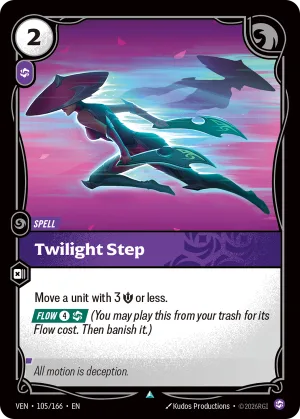
Twilight Step is in your trash. You can pay 4 energy and 1 Chaos power. The exhausted Clone has 0 Might, so it meets the spell’s target limit.
Core Rules 164.2; 416.1; 143.4; 155; 159.2; 187.11; 190.4; 316.8; 144; 107–108; 327; 445–447; 485–486; 469–472; 807; 829
Does Flow make this a Reaction?
Can Twilight Step be played in response to another spell just because you are using Flow?
Answer: No. Its normal timing still applies. Twilight Step has neither Action nor Reaction. Flow changes its cost and the zone you play it from, not its timing permissions.
Core Rules 164.2; 416.1; 143.4; 155; 159.2; 187.11; 190.4; 316.8; 144; 107–108; 327; 445–447; 485–486; 469–472; 807; 829
Pay the Flow cost. The spell is on the chain
Twilight Step has been played from your trash for 4 energy and 1 Chaos power. The Clone has not moved yet.
Core Rules 164.2; 416.1; 143.4; 155; 159.2; 187.11; 190.4; 316.8; 144; 107–108; 327; 445–447; 485–486; 469–472; 807; 829
Resolve the spell. Move the Clone to base
Twilight Step resolves and moves the Clone to your base. The spell is then banished as it leaves the chain. The Flow cost was already paid.
Core Rules 164.2; 416.1; 143.4; 155; 159.2; 187.11; 190.4; 316.8; 144; 107–108; 327; 445–447; 485–486; 469–472; 807; 829
Resolve the Legend’s new trigger
Banishing your spell triggers Master of Shadows. When that trigger resolves, your Legend becomes empowered. The Clone remains exhausted.
Core Rules 164.2; 416.1; 143.4; 155; 159.2; 187.11; 190.4; 316.8; 144; 107–108; 327; 445–447; 485–486; 469–472; 807; 829
One move. The spell is now banished
You spent the full Flow cost to move a unit back to base. No point was gained. This shows the interaction, not a recommendation to make this move in every game.
Core Rules 164.2; 416.1; 143.4; 155; 159.2; 187.11; 190.4; 316.8; 144; 107–108; 327; 445–447; 485–486; 469–472; 807; 829
What if you could pay only 3 energy?
Keep the original setup. Even with 1 Chaos power, 3 energy cannot pay this Flow cost. The spell stays in the trash; no move or banish occurs.
Answer: The play cannot be paid for. Both parts of the cost must be paid. One Chaos power does not cover the fourth energy.
Recap
Three things to take to the table
Might, a ready unit and an empowered Legend are tools. They are not points. Think about which battlefield the play helps you conquer or hold.
Core Rules 469-472
Rule numbers refer to Riot’s Core Rules. Riot’s rule documents ↗ · Glossary · Card rulings