Riftbound rules
How a game works, how you win and how to play your cards, in plain words. Riot’s full rulebook, the ban list and errata are at the end.
- 8points to win
- 40+cards in a Main Deck
- 12runes in a Rune Deck
- 3battlefields you bring
On this page 24 sections
How a game works
Riftbound is a card game for two players, with team and free-for-all modes too. Each player builds a deck around a Legend, a League of Legends champion who sets the deck’s domains, and brings a matching champion unit to play.
The table has two battlefields, one from each player. You play units, move them onto battlefields and fight for control. Taking control of a battlefield scores you a point, and it scores again at the start of each of your turns while you still hold it. The first player to 8 points wins.
You pay for cards with runes. Two more come out every turn, so a game starts with small plays and builds to big ones.
The table
Each player plays on their own mat, and the battlefields go between the two mats. This is the layout printed on Riot’s official mat, with real cards from a game a few turns in, seen from your seat.
- Points. The numbers along the top edge keep your score. You need 8 to win.
- Base. Your units and gear that aren’t at a battlefield.
- Legend. Your Champion Legend. It stays here all game.
- Champion. Your Chosen Champion waits here until you play it.
- Rune Deck. Your 12 runes, face down. You channel the top 2 each turn.
- Runes. Runes you’ve channeled. Exhaust one for energy, or recycle one for power.
- Trash. Spells go here once they resolve, and so does anything killed or discarded. It’s face up, so anyone can look through it.
- Main Deck. Face down. You draw from the top.
- Battlefields. One from each player, between the mats. Units move onto them to fight for points.
- Facedown zone. Each battlefield has room for one face-down card. Only the player who controls the battlefield can hide one there.
Ready and exhausted
A card on the board is either ready, standing upright, or exhausted, turned sideways. You exhaust a rune to make energy and a unit to move it, and units arrive exhausted when you play them. At the start of your turn, in your Awaken Phase, everything you control stands back up.
 Ready
- Exhausted
How to win
You win when you have 8 or more points and more points than your opponent. Points come from scoring battlefields, and there are two ways to score one.
Conquer
Take control of a battlefield. Your units move onto it and nobody stops them, or they win a fight there.
Moved in this turn, so it’s turned sideways.
Hold
Start your turn in control of a battlefield. You score every battlefield you control in your Beginning Phase.
Already there when your turn starts.
Each battlefield can score you once per turn, whichever way you score it.
The final point
Conquering can’t always win the game. When you have 7 points and conquer a battlefield, you only get the 8th point if you’ve scored every battlefield this turn. Otherwise you draw a card instead.
In a 1v1 game that means holding one battlefield at the start of your turn and conquering the other, or conquering both in the same turn. Holding has no such limit, so a battlefield you still control when your turn starts can win the game on its own.
Other ways points move
- Burning out. If you have to draw from an empty Main Deck, shuffle your trash in as your new Main Deck and your opponent gains 1 point. Then you draw.
- Card effects. Some cards give points directly. Those aren’t limited by the final point rule.
Battlefields
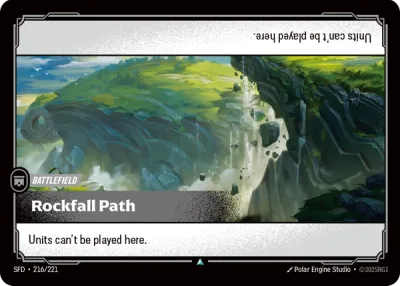
Battlefields are where the game is fought. They’re wide cards, laid sideways between the two mats. Each player brings three, and a 1v1 game uses one of yours and one of your opponent’s. Either player can take either one.
Each battlefield has its own rule printed on it. Some trigger when you conquer or hold it. Some change things for every unit there, on both sides.
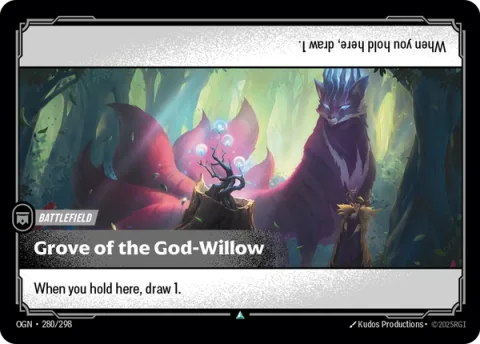 Grove of the God-Willow
When you hold it
Control it when your turn starts and you draw a card, as well as scoring the point.
 Zaun Warrens
When you conquer it
Take it and you discard a card, then draw one, as well as scoring the point.
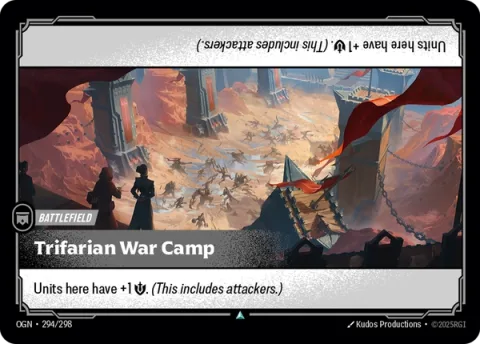 Trifarian War Camp
Always on
Every unit there has +1 Might, yours and your opponent’s, attackers included.
The facedown zone
Each battlefield also has room for one face-down card. On your turn, you can hide a card with Hidden there by paying 1 power of any domain, but only at a battlefield you control. Both players can see a card is there, and only you know what it is.
From the next turn on, yours or your opponent’s, you can play it from there, ignoring its printed cost. If you lose control of the battlefield, the hidden card is removed.
What’s in a deck
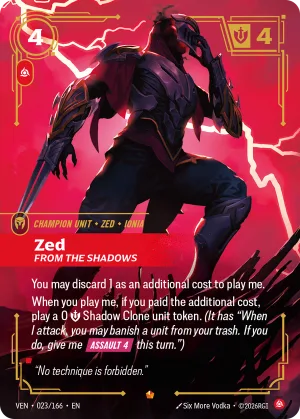
A Riftbound deck has five parts. Here they are for a Zed deck.
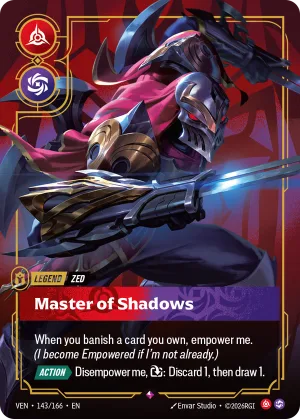
- Champion Legend1
- Sets your deck’s domains. It starts the game in your Legend Zone and stays there all game. It can’t be killed or moved, and its abilities work from there.
- Chosen Champion1
- A champion unit with the same champion tag as your Legend. Zed, From the Shadows has the Zed tag, like Master of Shadows. It starts in your Champion Zone, and you can play it from there whenever you could play it from your hand.
- Main Deck40+
- Your units, gear and spells, including the Chosen Champion. Up to 3 copies of any card. Different subtitles make different cards, so 3 Yasuo, Remorseful and 3 Yasuo, Windrider is fine. Up to 3 Signature cards in total, all with your Legend’s champion tag.
- Rune Deck12
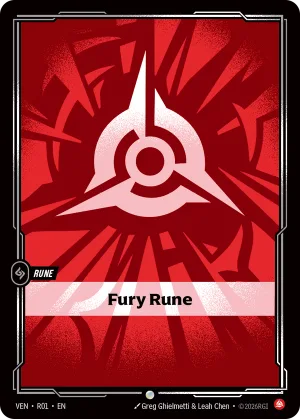
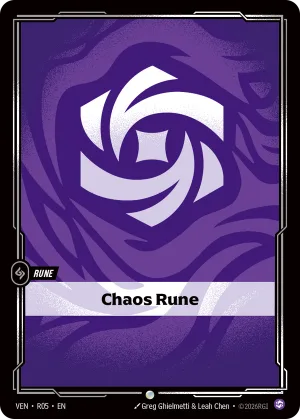
- Runes of your domains, shuffled and kept apart from your Main Deck. They pay for everything.
- Battlefields3
- Three different battlefields. In a 1v1 game, one of yours is picked at random and the other two sit out.
Domains decide what goes in
There are six domains, each with its own color and symbol.
- Furyred
- Calmgreen
- Mindblue
- Bodyorange
- Chaospurple
- Orderyellow
Your Legend’s domains are your deck’s domains. A card with one domain fits if your Legend has it. A card with two domains needs both. A card with no domain fits any deck. Master of Shadows is Fury and Chaos, so a Zed deck plays Fury cards, Chaos cards and cards that are both.
Setting up a game
- Place your Legend and champion. Your Legend goes in your Legend Zone and your Chosen Champion in your Champion Zone.
- Pick a battlefield. Each player picks one of their three battlefields at random. Both go on the table at the same time.
- Shuffle. Shuffle your Main Deck and your Rune Deck separately.
- Decide who goes first. Flip a coin or use any fair random method you both agree on.
- Draw 4. Each player draws four cards.
- Mulligan. Starting with the first player, set aside up to 2 cards, draw that many, then put the set-aside cards on the bottom of your Main Deck.
- Play. The first player takes their turn. The player going second channels 3 runes instead of 2 on their first turn.
In a best-of-three match you choose your battlefield instead of picking at random. A battlefield used in a game someone won can’t be picked again that match.
Your turn, phase by phase
Every turn runs through the same six phases, in order. Only the player whose turn it is plays cards normally. On your opponent’s turn you can play Action and Reaction cards, at the moments covered below.
Awaken
Ready everything you control: units, gear, runes and your Legend.
Beginning
Start-of-turn effects happen. Then you score every battlefield you control. That’s holding.
Channel
Put the top 2 runes of your Rune Deck onto the board, ready to use.
Draw
Draw a card. If your Main Deck is empty, you burn out first.
Main
Leftover energy and power empty out. Then play cards, use abilities and move units, in any order, as much as you can afford. Showdowns and combat happen here.
Ending
End-of-turn effects happen. Then all damage heals, “this turn” effects end and unspent energy and power are lost.
Reading a card
Every card in your Main Deck lays out the same information in the same places. Here’s Zed, From the Shadows.
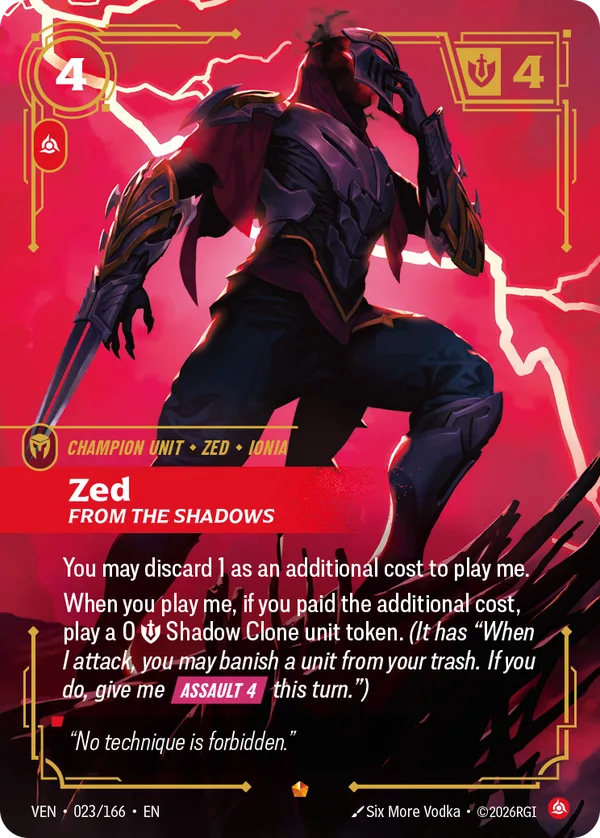
- Energy cost. 4. Any rune can make energy.
- Power cost. One Fury symbol, so 1 Fury power.
- Might. 4. The damage this unit deals in a fight, and the damage it takes to kill it.
- Type and tags. A champion unit with the Zed and Ionia tags. The Zed tag matches it to a Zed Legend.
- Name. The subtitle is part of the name, so other Zed cards are different cards.
- Rules text. What the card does. Keywords sit in colored boxes. Italic text in parentheses is reminder text: it explains, and changes nothing.
- Domain. The symbol in the bottom-right corner. This card is Fury.
Paying for cards
A card’s cost sits in its top-left corner and has up to two parts. Your runes pay for both.
Energy
The number. Exhaust any rune, turning it sideways, to add 1 energy.
Power
The colored symbols under the number, 1 power each. Recycle a rune of that domain, putting it on the bottom of your Rune Deck, to add 1 power. A rainbow symbol takes power of any domain.
A rune doesn’t need to be ready to recycle, so one rune can give you 1 energy and then 1 power in the same turn. Recycling takes the rune off the board, so you’ll have one fewer rune until you channel it again.
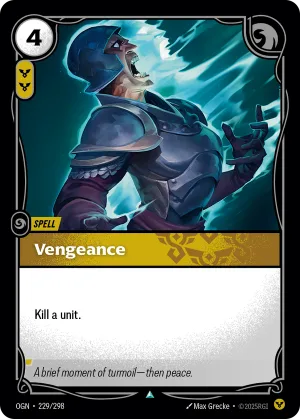
Example
Vengeance costs 4 energy and 2 Order power. With four Order Runes on the board, exhaust all four for 4 energy, then recycle two of them for 2 Order power. Next turn you’ll have two runes, plus the two you channel.
Energy and power don’t carry over. Your pool empties at the start of your Main Phase and again at the end of every turn, so make them when you’re about to spend them.
Playing cards
On your turn, in your Main Phase, you can play a card whenever nothing else is happening: no spell waiting on the chain and no showdown going on. Pay its cost and it does what it says. Your Main Deck holds three kinds of cards.
Units
Your fighters. Play them to your base or to a battlefield you control. They arrive exhausted, so a unit can’t move until your next turn unless something readies it. Accelerate lets you pay extra for it to arrive ready. Units stay on the board until something removes them.
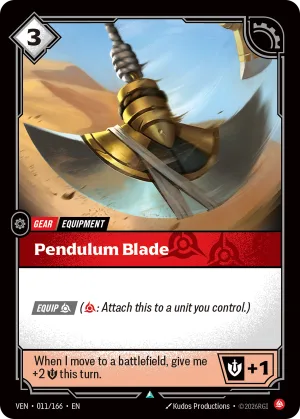
Gear
Items that stay on the board. They’re played to your base and arrive ready. Equipment, like Pendulum Blade, attaches to one of your units with Equip and gives it the Might bonus and the text in its lower box.
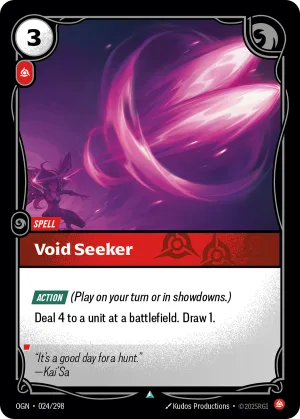
Spells
One-time effects. A spell does what it says, then goes to your trash. Void Seeker deals 4 to a unit at a battlefield and draws you a card.
When you can play a card
- Most cards: on your turn, in your Main Phase, when nothing else is happening.
- Action: also during showdowns, on either player’s turn.
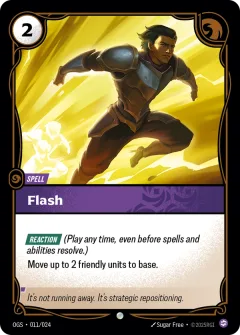
- Reaction: any time, on either player’s turn, even in response to a spell before it resolves.
Abilities on your units, gear and Legend follow the same timing. An ability is written as a cost, a colon, then what it does.
Responding: the chain
When a spell or ability is played, it goes on the chain and waits. Before it resolves, each player in turn can respond with a Reaction, which goes on top. When everyone passes without adding anything, the newest item resolves. Then players can respond again to whatever is left, until the chain is empty.
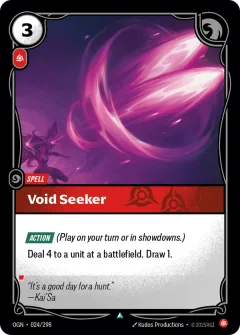 You play Void Seeker.It would deal 4 to one of their units at a battlefield. It goes on the chain and waits.
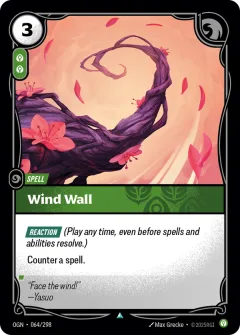 They respond with Wind Wall.It’s a Reaction that counters a spell, and it goes on top of yours.
- Wind Wall resolves first.The newest item on the chain always goes first. Void Seeker is countered: it does nothing and goes to your trash, and you don’t get its cost back.
Units and gear don’t wait. They resolve as soon as they’re paid for, so nobody can respond to the card itself. Their “when you play me” abilities do go on the chain.
Moving units
Units do their work on battlefields. To move a unit, exhaust it. It can go:
- from your base to a battlefield,
- from a battlefield back to your base,
- from one battlefield to another only if it has Ganking.
You can move several units at once if they’re all going to the same place. Moves happen in your Main Phase, but not during a showdown or combat and not while something waits on the chain. A move happens instantly, so nobody can respond to the move itself.
Where a move leads
- A battlefield you control: nothing more happens.
- An empty battlefield you don’t control: a showdown starts. If you still have units there when it ends, you take control and conquer it.
- A battlefield with enemy units: combat. You’re the attacker.
You keep control of a battlefield as long as you have units there. If they all leave or die, it goes back to nobody.
Showdowns
A showdown is a short window where both players can play Action and Reaction cards. It starts when you move onto a battlefield you don’t control, before you take it or fight for it.
- The player who moved in goes first.
- On your go, play one Action or Reaction card or ability, or pass.
- Once it resolves, the other player gets a go.
- When both players pass in a row, the showdown ends.
If the battlefield was empty and only your units are still there, you take control and conquer it. If your opponent gets units onto it during the showdown, it becomes combat.
Combat
Combat starts when units of both players end up at the same battlefield. The player who moved in is the attacker. The other is the defender.
- Showdown. The attacker goes first, and both players can play Action and Reaction cards.
- Damage. Each side adds up the Might of its units there and deals that much damage, split among the enemy units. The attacker splits theirs first, then the defender, and all of it lands at the same time. You must give one unit lethal damage before moving on to the next. Tank units must be hit first and Backline units last.
- Result. Units with damage equal to or above their Might die, and every survivor heals. If both sides still have units, the attackers go back to base and the defender keeps the battlefield. If only one side has units left, that player wins the fight. An attacker who wins takes control and conquers it. If nobody is left, the battlefield goes back to nobody.
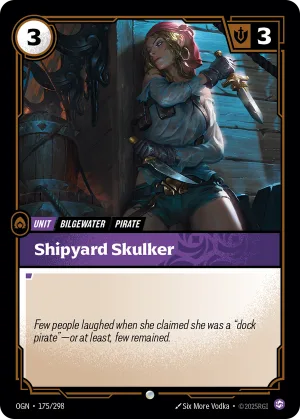
Your attackers
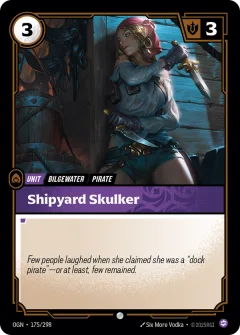 Shipyard Skulker
3Might
Takes 3. Dies.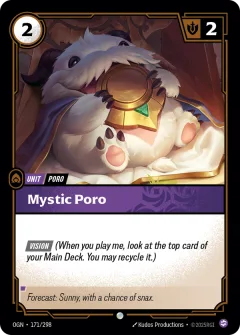 Mystic Poro
2Might
Takes 1. Survives, then heals.
You deal 3 + 2 = 5
Their defender
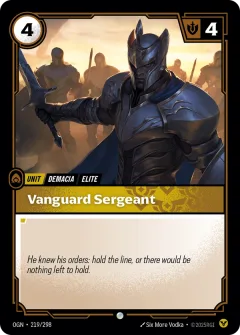 Vanguard Sergeant
4Might
Takes 5. Dies.
They deal 4
You attack with Shipyard Skulker (3 Might) and Mystic Poro (2 Might) into their Vanguard Sergeant (4 Might). You deal 5: 4 is lethal, and with no other unit to hit, the last 1 lands on it too. They deal 4 and choose which of your units takes lethal damage first. Say it’s Shipyard Skulker: 3 kills it, and the last 1 goes on Mystic Poro.
Whichever unit they pick, one of yours survives. You’re the only one left, so you conquer the battlefield and score a point.
Might, damage and buffs
- Might is both how much damage a unit deals and how much it takes to kill it.
- Damage stays on a unit until combat ends or the turn ends, then it heals.
- Assault adds Might while attacking. Shield adds Might while defending.
- A buff is a +1 Might counter. A unit can only have one.
- A unit with 5 or more Might is Mighty, which some cards check for.
Keywords
Keywords are short words that stand for longer rules. Many cards repeat the rule in italic reminder text. These 12 appear on the most cards. Every keyword has its own page, with every card that has it.
- ReactionYou can play or use this on any player's turn, including in response to a spell or ability before it resolves. It changes when you can play it, not what it does.
- ActionYou can play or use this during showdowns on any player's turn, as well as at its usual times. It changes when you can play it, not what it does.
- DeflectOpponents' spells and abilities that choose this cost 1 extra power of any domain for each point of Deflect, every time they choose it. Your own cards pay nothing extra.
- EquipPay the Equip cost to attach this gear to a unit you control. That unit is Equipped for as long as the gear stays attached.
- HiddenOn your turn, pay 1 power of any domain to put this card facedown at a battlefield you control. From your next turn, you can play it from there at any time, ignoring its base cost, while you still control that battlefield.
- AssaultThe unit gets +1 Might while it is attacking, or +N for Assault N. Assault from more than one source adds up.
- GankingThis unit can move straight from one battlefield to another with its normal move. Units without Ganking can't. It costs nothing extra and gives no extra moves.
- ShieldThe unit gets +1 Might while it is defending, or +N for Shield N. Shield from more than one source adds up.
- EmpowerPay the Empower cost to make this card Empowered. Text marked Empowered only works while it is, and you can't Empower it again while it already is.
- AccelerateUnits normally enter play exhausted. Accelerate is an optional extra cost, 1 energy and 1 power of the unit's domain, that you pay as you play it so it enters ready instead.
- TankIn combat this unit is hit first: damage can't go to its side's units without Tank until every unit with Tank has been assigned lethal damage.
- DeathknellIts effect happens when this permanent is killed and goes to the trash. If the death is replaced, for example by a recall, the effect doesn't happen.
When cards and rules disagree
The card wins
If a card’s text contradicts the rules, do what the card says.
Can’t beats can
If one effect says something can happen and another says it can’t, it can’t.
Do what you can
If part of a card’s instructions is impossible, do the rest.
At an event, call a judge for anything you can’t settle at the table. Riot’s answers about specific cards are in Card rulings.
Other ways to play
Everything above is the 1v1 game. Riot’s rules define four more modes.
| Mode | Players | Points to win | Battlefields |
|---|---|---|---|
| 1v1 Duel | 2 | 8 | 2 |
| 1v1 Match, best of three | 2 | 8 | 2 |
| Skirmish, free-for-all | 3 | 8 | 3 |
| War, free-for-all | 4 | 8 | 3 |
| 2v2 Magma Chamber | 4 | 11 | 3 |
- In free-for-all and 2v2 games, the first player skips their first draw and the last player channels an extra rune on their first turn.
- In 2v2, teammates share their points and win or lose together, but each player controls their own units. Teammates can’t use the same Legend or the same battlefields.
- 2v2 has its own ban list. See both ban lists
Riot’s official rulebook
Everything above is a plain-words summary of Riot’s Core Rules. The full document numbers every rule, so you can look up exactly how an interaction works.
- Core Rules ↗How the game works, rule by rule. In effect since October 16, 2026.
- Quick Start Guide ↗Riot’s illustrated beginner booklet. Page 7 shows the official play mat.
- Tournament Rules ↗How sanctioned events run: formats, deck rules and how judges handle problems.
- Rules Hub ↗Riot’s page with every current document, the ban lists, patch notes and errata.
Find a topic in the Core Rules
| Topic | Rules |
|---|---|
| When cards and rules disagree | 001-056 |
| What’s in a deck | 101-103 |
| The board and its zones | 104-109 |
| Setting up | 110-118 |
| Parts of a card | 125-139 |
| Units, gear, spells, runes, battlefields and Legends | 140-176 |
| Control and winning | 188-196 |
| Costs | 201-206 |
| Your turn and its phases | 301-317 |
| The chain and showdowns | 325-348 |
| Playing a card, step by step | 349-359 |
| Game actions: draw, exhaust, recycle, kill and more | 408-446 |
| Moving | 447-460 |
| Combat | 461-468 |
| Scoring and the final point | 469-474 |
| Modes of play | 483-491 |
| Buffs and Mighty | 701-711 |
| Keywords | 800-832 |
Radiance rules update
In effect since October 16, 2026
Riot published new Core Rules and Tournament Rules on October 9, 2026. They took effect with the Radiance Pre-Rift on October 16, 2026.
Core Rules
- Deploy, Disarm and Show Off get their full rules, 830 to 832.
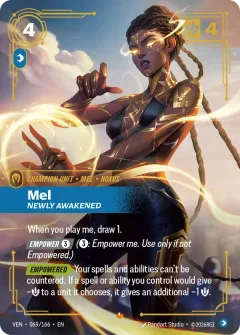
- Making new choices, as Rebuttal and Mystic Reversal do, means remaking every choice. Anything that triggers on being targeted triggers again.
- Copy effects move to a layer of their own, applied first, and copying becomes a game action.
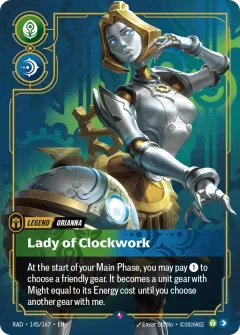
- A unit can’t be attached to anything, so an Equipment that becomes a unit, as with Orianna, Lady of Clockwork, detaches.
- Pending items on the chain can’t be targeted by spells or abilities.
- “Pick” means a choice that doesn’t target. “Choose” means you target what you choose.
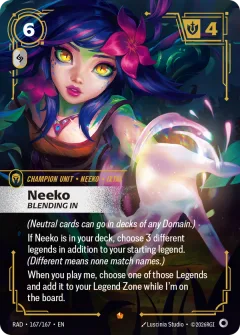
- Choices made while building a deck, as for Neeko, Blending In, get their own rules.
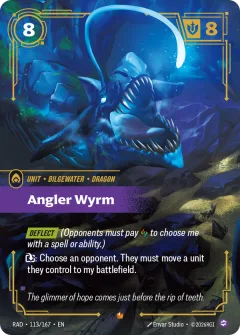
- The Vendetta FAQ’s fixes are written into the rules: empowering more than once (Kayle, Justified), negated and ignored instructions, mandatory requirements and restrictions (Dragon Roost, Perched Grimwyrm), and 2v2 scoring.
Tournament Rules
- Radiance joins Standard with its release on October 23, 2026 (601.3.c.6).
- A deck with Neeko, Blending In registers the Legends chosen for her (401.2.a).
- You can’t change a gameplay decision once your opponent has had to point out information it affects (509.5 to 509.6.b).
- Players may bluff about their private information (502.11).
- Randomized deck checks happen at the start of a round and check every part of the deck (411.3).
- Loops must be fully deterministic, with no random elements (505.2).
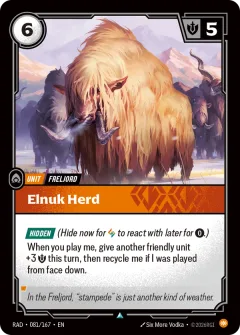
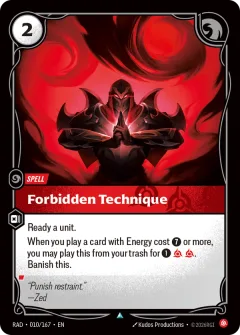
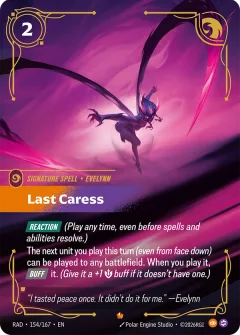
Riot also corrected four Radiance cards: Elnuk Herd; Forbidden Technique; Last Caress; and Neeko, Blending In. See the corrected wording
Core Rules PDF ↗ · Core Rules patch notes ↗ · Tournament Rules PDF ↗ · Tournament Rules changelog ↗
10 more cards leave Standard Constructed and 2v2 Constructed
Effective November 23, 2026
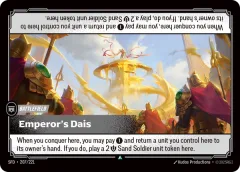
Riven, Broken Blade; Zhonya’s Hourglass; Stellacorn Herder; Nocturne, Horrifying; Rhasa the Sunderer; Brynhir Thundersong; Dazzling Aurora; Baited Hook; Emperor’s Dais; and Star Spring.See the ban list
Ban list
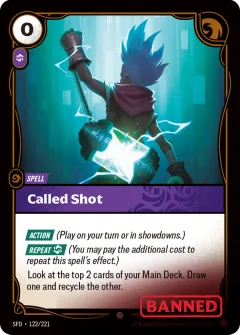
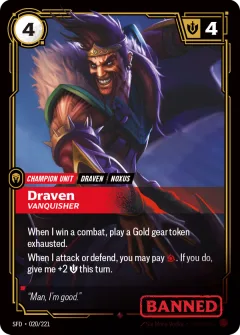
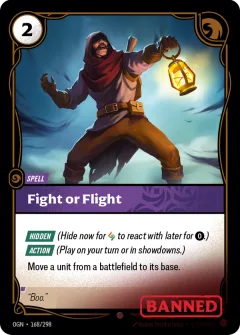
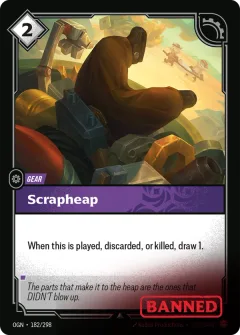
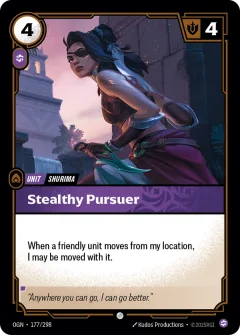
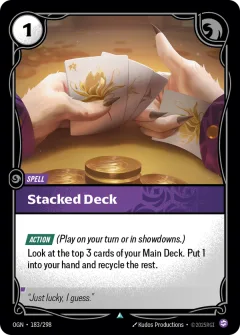
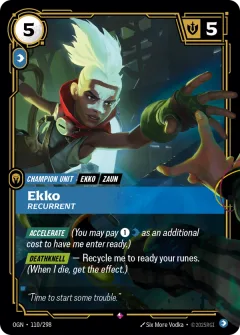
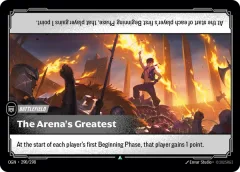
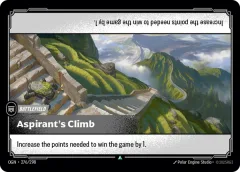
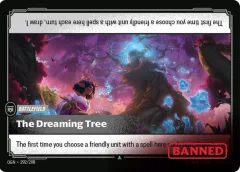
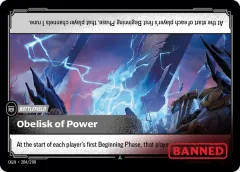
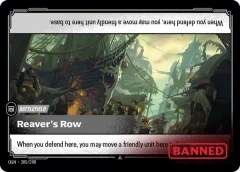
12 cards are banned in Standard Constructed, and 13 cards are banned in 2v2 Constructed. The latest change took effect September 18, 2026.
Errata
Riot has corrected the text of 56 cards: 4 in Radiance, published October 9, 2026, 8 in Vendetta, published July 23, 2026, and 44 from earlier sets.
Card rulings
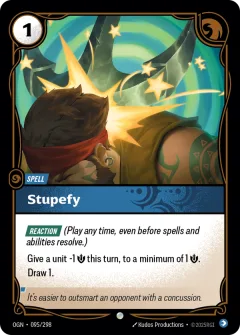
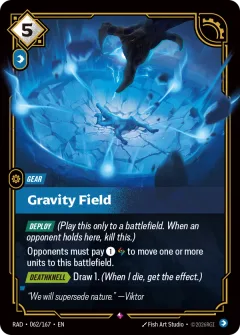
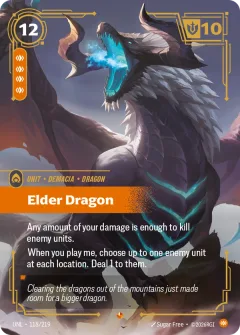
Riot has answered 142 questions about how 171 specific cards work, collected by card name.
Which rules take precedence?
The Radiance Rules FAQ and Clarifications, published October 26, 2026, overrides the Core Rules where they differ, until Riot publishes a new Core Rules Document. The Radiance Core Rules, in effect since October 16, 2026, include the August 14 Vendetta FAQ’s clarifications. At an event, ask a judge to resolve a disputed interaction.
Radiance FAQ ↗ · Vendetta FAQ ↗ ·Card rulings by card name · Vendetta rules and release timeline · Glossary
Have a rules question? Ask in the Riftwatch Discord ↗