Riftbound ban list
13 cards are banned at Riftbound organized-play events: 12 in both Standard Constructed and 2v2 Constructed, and 1 more in 2v2 Constructed only.
- 12banned in Standard
- 13banned in 2v2
- latest change
Banned in Standard and 2v2
7 cards and 5 battlefields.
Banned in 2v2 only
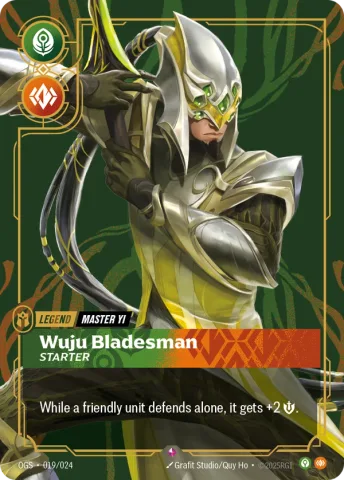
1 Legend, legal in Standard Constructed.
When and why
Every change to the ban list, newest first, with Riot’s reason for each card.
Eight cards and two battlefields banned
Standard and 2v2, in effect from November 23
These bans do not apply in Korea or the Traditional Chinese regions until Radiance releases there.
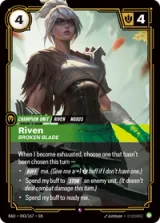
- Riven, Broken Blade
- Riot called the four-energy chosen champion a guaranteed turn-two play. She spends her buff to ready herself, which lets her conquer at no risk, or to stun, which punishes opponents who hold battlefields. Riven decks were 43% of the decks registered at the European Regional Championship.
- Zhonya’s Hourglass
- It protects a deck’s strongest units from removal, and because it can be hidden it dodges much of the gear removal. Riot called it very powerful with Astral Heron.
- Stellacorn Herder
- A reward for movement effects with no limit on how many times it pays off. In Riven decks it replaced itself with very little counterplay, and Riot said it shores up the Calm domain’s weaknesses too well.
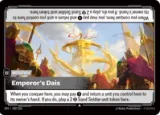
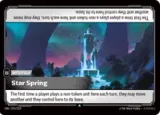
- Emperor’s DaisStar Spring
- With Riven, both battlefields took the risk out of conquering: a player could protect the exhausted unit that conquered and still have a ready unit to return to base. Riot compared them to Reaver’s Row, banned for similar reasons.
- Nocturne, Horrifying
- An early zero-energy play that costs no card when it is found and played off a reveal. Riot said a Kennen player hitting two or three Nocturnes early is an unhealthy pattern, and that the problem grows with every card that looks at the top of the deck.
- Rhasa the Sunderer
- A payoff for filling the trash, which Kennen does very well. Once the trash is full enough it costs no energy, and recursion brings it back again and again. Riot expects the problem to grow as more cards fill the trash.
- Brynhir Thundersong
- When played, it stops opponents from playing cards for the rest of the turn. Played in the opponent’s Beginning phase, it locks them out of their own turn, and with effects that banish a unit and replay it, it gave Kai’Sa decks a removal tool for enormous units.
- Dazzling Aurora
- Riot said it turns every energy-ramping deck into an Aurora deck and pushes Body decks down the same path. It repeatedly fetches large game-ending units for free, pressure Riot does not want on the format long term.
- Baited Hook
- It sees little competitive play today. Riot banned it ahead of time: it puts high-cost units into play for free because it checks Might, not energy cost, and cards in upcoming sets, Legacy included, carried a high risk of being a problem with it.
Riot’s announcement ↗ · 8 Riftbound tournament decks that don't lose a card to the November 23 bans
Stacked Deck and Ekko, Recurrent banned
Standard and 2v2
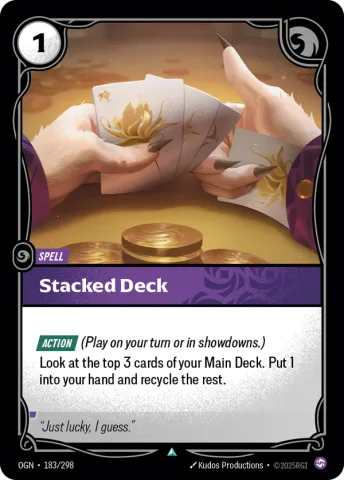
- Stacked Deck
- A low-cost inclusion in most Chaos decks. Riot said it gave too much consistency, most of all with the Kennen Legend.
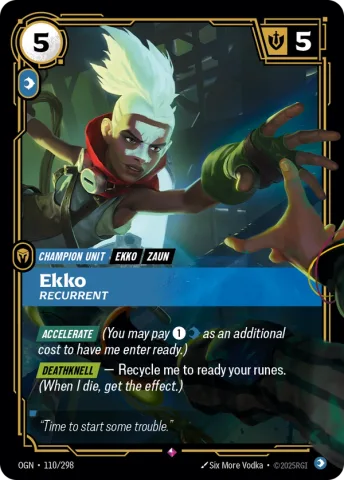
- Ekko, Recurrent
- He enabled the Lux infinite combo. Riot said the deck saw little play, but its combo turns gave the opponent few chances to interact.
Riot’s announcement ↗ · What the Stacked Deck and Ekko bans mean for Riftbound
Three more in Standard, and the 2v2 list begins
The 2v2 Constructed ban list starts on this date with every Standard ban.
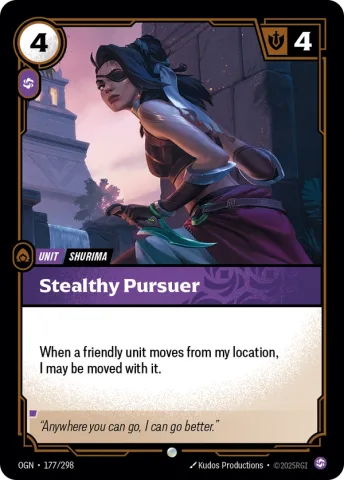
- Stealthy Pursuer
- Part of an infinite combo with Eye of the Herald and Renata Glasc, Industrialist that could make unlimited Recruits as early as turn three.
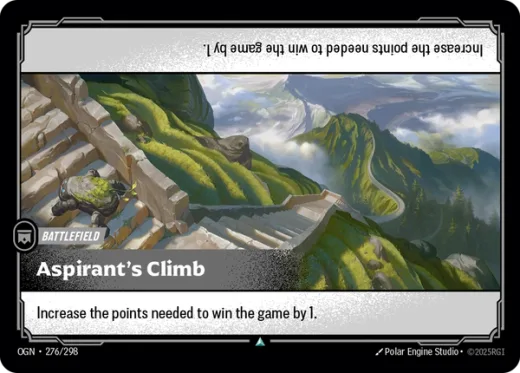
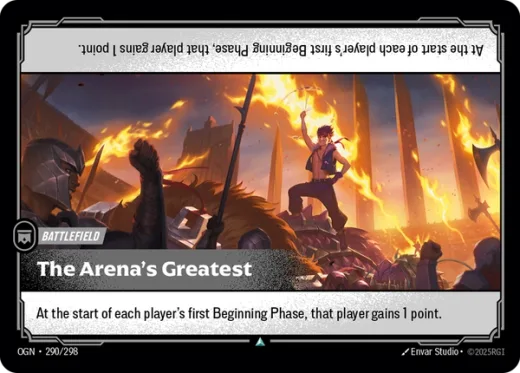
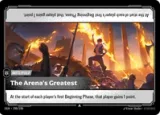
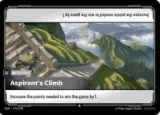
- The Arena’s GreatestAspirant’s Climb
- Both point battlefields had become the default pick in Game 2 or 3, once players knew who went first. The Arena’s Greatest favored the first player, and the extra point from Aspirant’s Climb made rounds longer.
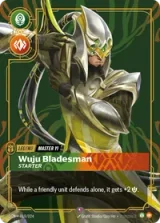
- Master Yi, Wuju Bladesman
- 2v2 only His defensive bonus covers both teammates, and Riot saw him heavily overrepresented among top 2v2 teams. He stays legal in Standard.
Riftbound’s first bans
Standard
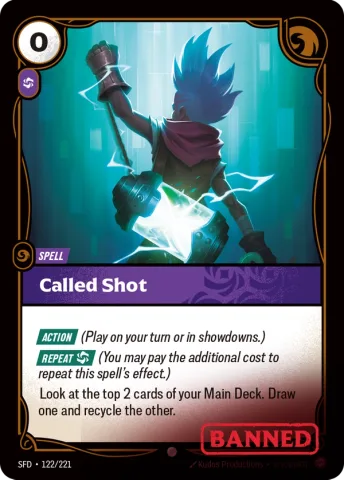
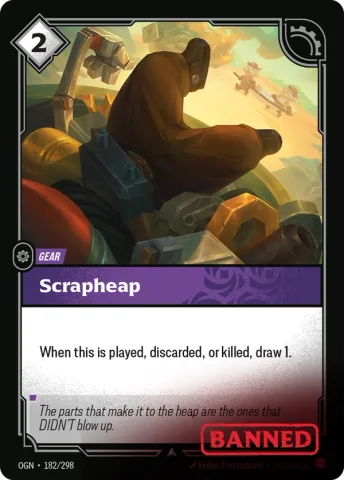
- Called ShotScrapheap
- Riot banned both to rein in Miracle decks, Chaos decks that drew through most of their deck and played a string of undercosted units in one turn. Their long turns delayed tournament rounds.
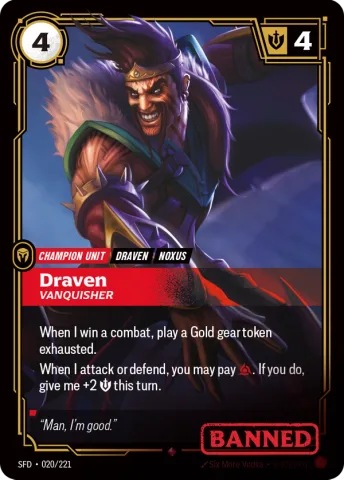
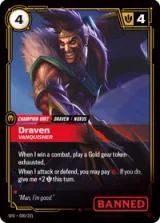
- Draven, Vanquisher
- A strong, guaranteed turn-two play that left Draven decks more common and stronger than Riot considers healthy. Riot banned the unit, not the Legend, and Draven decks keep Draven, Showboat as a Chosen Champion.
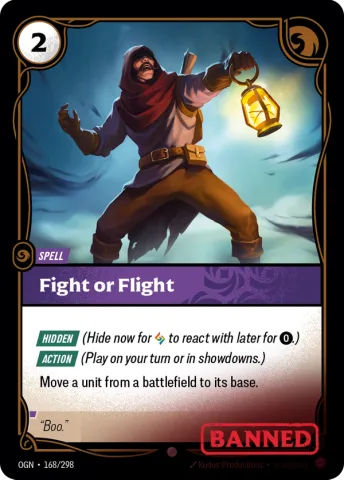
- Fight or Flight
- Banned to limit Chaos decks in general. Played from hand or hidden, it negates a combat or protects a unit, and Riot called it “best in class in too many scenarios.”
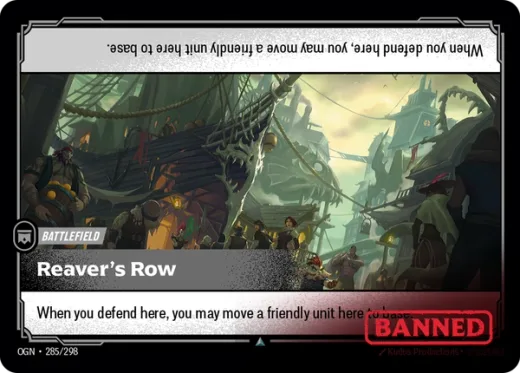
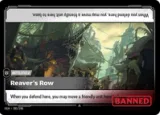
- Reaver’s Row
- It led players to retreat instead of fighting, and it was disproportionately strong in Draven decks.
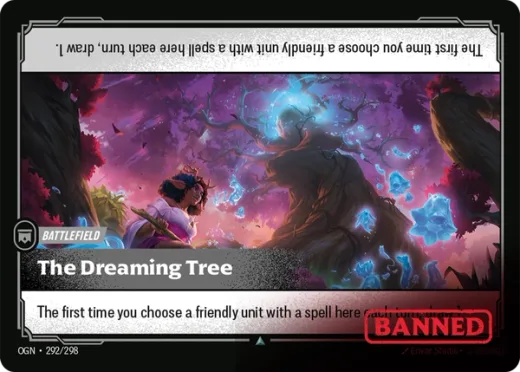
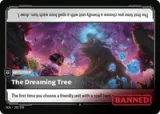
- Dreaming Tree
- Usable on both players’ turns, it gave decks more card flow and consistency than Riot wants.
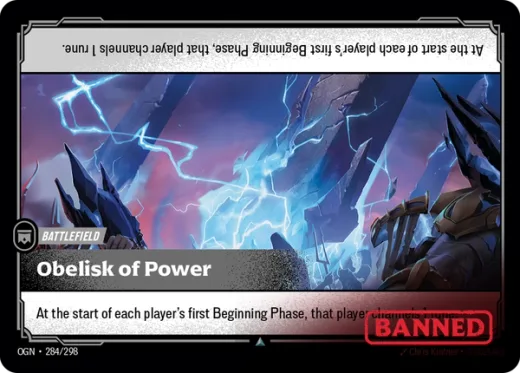
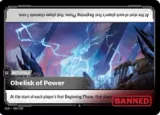
- Obelisk of Power
- It was everywhere among the strongest decks, and it let a deck hit the same energy breakpoints whether it went first or second.







What a ban means
A banned card cannot be registered in that format at organized-play events. Casual games follow whatever the table agrees. Standard Constructed and 2v2 Constructed keep separate lists, so check the format before you build.
Korean Standard uses its regional release pool and the global banned list. Korean format announcement ↗