By Ron Cruz · Published November 13, 2026 · Competitive · Report
Riot is banning ten cards in Standard Constructed and 2v2 Constructed, two of them battlefields. The bans start Monday, November 23, and all ten are legal until then.
Riot filed five of the cards under Riven, two under Kennen and one under Kai’Sa. The last two, Dazzling Aurora and Baited Hook, put units into play for free.
The Riven ban is the champion unit Riven, Broken Blade, not her Legend. None of the ten is a Legend, so Riven, Kennen and Kai’Sa can all still be played.
The November 23 bans at a glance
| What | Details |
|---|---|
| Bans start | Monday, November 23, 2026 |
| Formats | Standard Constructed and 2v2 Constructed |
| How many | Eight cards and two battlefields |
| Legends banned | None |
| Not affected yet | Korea and the Traditional Chinese regions, until Radiance releases there |
| Next ban announcements | From 2027, the Friday two weeks before and after each Continental |
The cards that were already banned are on the Riftbound ban list.
Riftbound banned cards: the full list for November 23
| Card | Type | Set | Riot's section |
|---|---|---|---|
| Riven, Broken Blade | Champion unit | Radiance | Riven |
| Zhonya's Hourglass | Gear | Origins | Riven |
| Stellacorn Herder | Unit | Spiritforged | Riven |
| Emperor's Dais | Battlefield | Spiritforged | Riven |
| Star Spring | Battlefield | Unleashed | Riven |
| Nocturne, Horrifying | Champion unit | Origins | Kennen |
| Rhasa the Sunderer | Unit | Origins | Kennen |
| Brynhir Thundersong | Unit | Origins | Kai'Sa |
| Dazzling Aurora | Gear | Origins | Its own |
| Baited Hook | Gear | Origins | Its own |
Riot said it wouldn’t print five of the ten the same way today.
When do the Riftbound bans start?
Riot says it tries not to ban cards within two weeks of a major tournament, so the bans don’t start until Monday, November 23.
All ten cards stay legal at events before then, including the Showdown in Los Angeles. On Riot’s list of upcoming events, the North America Regional Championship in Las Vegas, December 11 to 13, is the first Regional Championship after the bans start.
Riot said it knows the timing isn’t ideal with tournaments coming up, but that what it saw at the European Regional Championship and in its own playtesting called for decisive action now.
Why Riot banned five cards from the Riven deck
The Riven deck was 43% of the decks registered at the European Regional Championship. It took 3 of the top 4 places and 8 of the top 16.
Riven, Broken Blade
Riven, Broken Blade is a champion unit that costs four energy and no power.
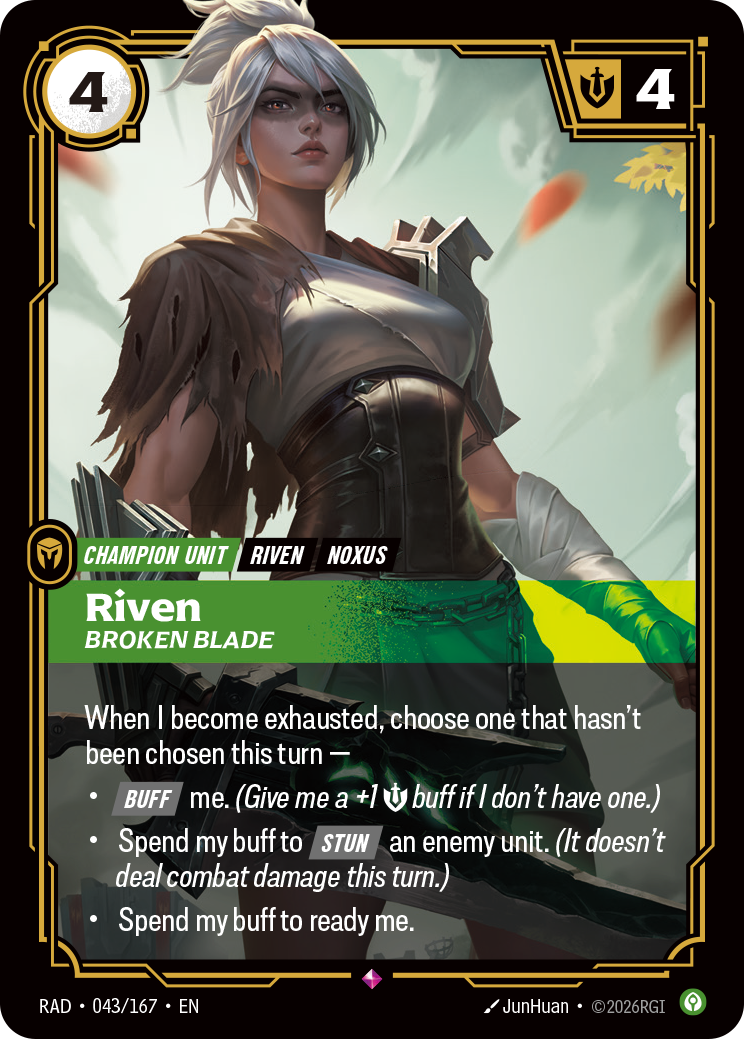
Each time she becomes exhausted, she picks one of three things, each only once a turn: buff herself, spend the buff to stun an enemy unit, or spend the buff to ready herself.
Riot’s problem with her: she’s a guaranteed turn-two play, she can conquer a battlefield without risking anything because she readies herself, and her stun punishes players who try to hold battlefields.
Zhonya’s Hourglass
Zhonya’s Hourglass is a two-energy gear. When one of your units would die, the Hourglass is killed instead and the unit goes back to base exhausted.

Riot’s concern: it protects a deck’s strongest units from removal, and because it can be played hidden, it dodges a lot of the cards that remove gear.
Stellacorn Herder
Stellacorn Herder is a four-energy unit that draws a card every time it moves, with no limit.

That missing limit is what Riot wouldn’t print today. In the Riven deck, it replaced itself right away when played to a battlefield, with very little counterplay.
Riot called it a staple that gives Calm decks draw power they need, but said it covers the Calm domain’s weaknesses too well and is likely to become more of a problem.
Emperor’s Dais and Star Spring
These are the two battlefields on the list. Riot banned both for the same reason: they take the risk out of conquering.

When you conquer Emperor’s Dais, you can pay one energy and return one of your units there to its owner’s hand to play a 2 Might Sand Soldier token there.

At Star Spring, the first time a player plays a non-token unit there each turn, they can move another unit they control there back to its base.
With Riven, a player could protect the exhausted unit that had just conquered and still have a ready unit to send back to base. Riot compared the two to Reaver’s Row, a battlefield it banned earlier for similar reasons.
Why Nocturne and Rhasa are banned
About 15% of players at the European Regional Championship registered Kennen. Kennen took 3 of the Top 8 places and won the event.
Kennen’s best draws, the ones with several Nocturnes or Rhasas, are very strong, and Riot said his Legend ability and signature spell make them come up more often.
Nocturne, Horrifying
Nocturne, Horrifying normally costs four energy and one power. If you look at or reveal him from the top of your deck, you can banish him and play him for one power of any domain.

That makes him an early play for zero energy that doesn’t cost you a card. Riot called a Kennen player finding two or three Nocturnes early an unhealthy pattern, and said the problem is likely to get worse as more cards that look at the top of the deck are printed.
Rhasa the Sunderer
Rhasa the Sunderer costs ten energy and one power, and one energy less for each card in your trash.

Riot called it a very powerful payoff for filling the trash, something Kennen does incredibly well. Once it costs no energy, playing it gives up very little, and it’s a big unit a deck can bring back again and again.
Why Brynhir Thundersong is banned
Riot said the European Regional Championship was mostly Riven against Kennen, with Kai’Sa a significant third.
Brynhir Thundersong is a six-energy unit. When you play it, your opponents can’t play cards for the rest of the turn.

Played during your opponent’s Beginning phase, it locks them out of their own turn. Riot said it wouldn’t print the card like that today, and that the ways to set it up are complex and frustrating to play against.
Combined with effects that banish a unit and ask its owner to replay it, Brynhir was also an extremely powerful removal tool against enormous units, one of Kai’Sa’s weaknesses.
Why Dazzling Aurora and Baited Hook are banned
Both put units into play without paying for them.
Dazzling Aurora
Dazzling Aurora is a gear that costs nine energy and two power. At the end of each of your turns, you reveal cards from the top of your deck until you hit a unit, and you play it for free.

Riot called it one of Riftbound’s boogeymen: if you aren’t playing it, you need a plan to beat it. It said Aurora turns every energy-ramping deck into an Aurora deck and pushes every Body deck down the same path to win best-of matches.
Riot still thinks ramp and big units are healthy for the game, but Aurora has too many dangerous things in one card.
Baited Hook
Baited Hook is a three-energy gear. For one energy and one Order power, you exhaust it and kill one of your own units, then look at the top five cards of your deck. You can play a unit from those five for free if its Might is no more than 1 higher than the unit you killed.

It doesn’t see much competitive play right now, but Riot said these bans could make room for it. Riot banned it early for two reasons: it checks Might instead of energy cost, which Riot wouldn’t do today, and cards in upcoming sets, Legacy included, have a high risk of being a problem with it.
With the World Showcase in January, Riot chose to ban it now instead of risking an emergency ban early next year.
What happens to the banned cards you own?
From November 23 you can’t play them at official events, and that includes Nexus Nights.
Riot said it had avoided banning some of these Epic cards since launch out of respect for what players put into getting them. It also said it’s working toward a future format where you’ll get to play them again. Riot hasn’t said when.
Are there new 2v2 bans?
All ten bans apply in 2v2 Constructed as well as Standard. Riot made no 2v2-only bans this time.
It said results and player sentiment show Yasuo is quite strong in 2v2, that it’s testing changes to the format, and that it will share more early next year.
How will Riftbound bans work in 2027?
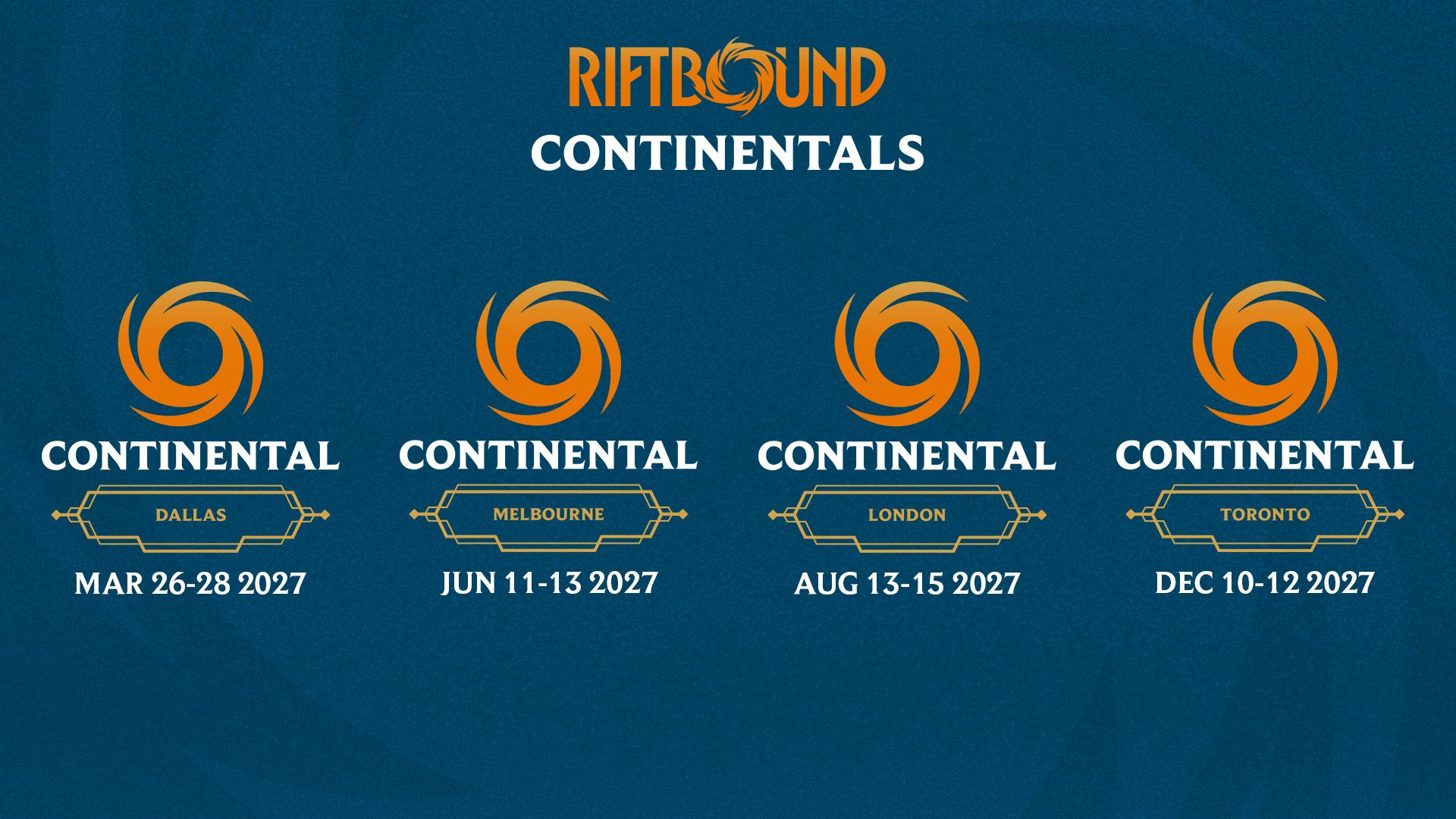
From next year, Riot will only announce bans in two windows around each Continental: the Friday two weeks before it, and the Friday two weeks after.
References
- Radiance Ban List Updates (Effective November 23, 2026) ↗ · Riot Games
- Official English card gallery ↗ · Riot Games